How soon a rolled-in or drooping eyelid needs to be seen comes down to pain and corneal risk, not how dramatic the eye looks. A lid that rolls inward (entropion) drags hair and lashes across the cornea with every blink, causing pain and damage to the surface of the eye. Squinting, holding the eye closed, pawing at the face, or a cloudy patch on the surface needs a same-day visit, because permanent damage to your pet's vision can occur. Redness, watery discharge, or a lower lid that sags outward (ectropion) and traps dust usually calls for an exam in the next day or two. A lid that has looked slightly loose for months, with a comfortable and clear eye, still needs an appointment on the calendar, just not a scramble. Both conditions are highly treatable, and surgical correction goes best when the cornea is still healthy.
Advanced Veterinary Medical Center in Milpitas sees eyelid problems at all severity levels. We treat eye redness, discharge, swelling, and vision changes as urgent care, and most of those cases can be seen the same day when you call ahead. An exam settles how much the lid is rubbing and whether the cornea has taken damage, and if a surgical correction is needed, our soft tissue surgery runs with pre-op blood screening, dedicated nursing, and pain management. If your pet is squinting or an eyelid does not look the way it used to, let us know what you are seeing and we will help you sort out whether the answer is today, the next day or two, or an appointment on the calendar.
Eyelid Trouble at a Glance
- Entropion rolls the eyelid inward so hair scrapes the cornea; ectropion is a lower lid drooping away from the eye. Both hurt, and neither one is cosmetic.
- An eye held shut, a cloudy patch, or a pet rubbing their face on the carpet needs attention right away, not a wait-and-see week.
- Most cases are resolved with one well-planned surgery, and pets are usually noticeably more comfortable within days.
- Puppies and kittens whose faces are still changing can often be managed with temporary sutures until their anatomy settles.
Is the Eyelid Rolled In or Drooping Out?
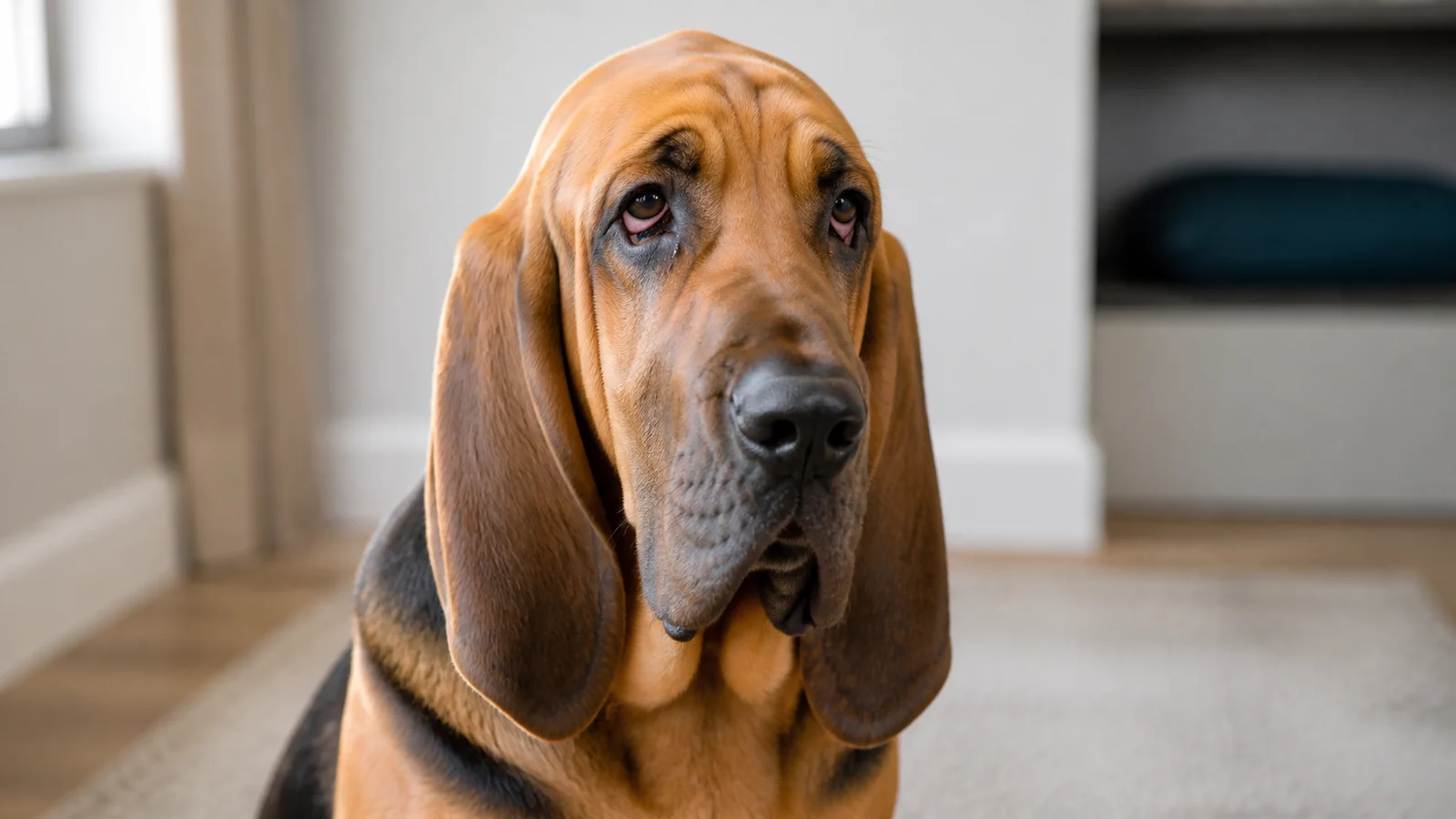
Entropion means the lid rolls inward, so skin and lashes ride against the cornea with every blink. Ectropion is the opposite, a lower lid that droops away and leaves the pink inner tissue and the surface of the eye exposed to dust, wind, and bacteria.
| Entropion | Ectropion | |
| Lid position | Curls in toward the eye | Hangs slack, falling away from the eye |
| What you notice | Squinting, tearing, one eye kept closed | A droopy, red-lined lower lid |
| Why it hurts | Hair and lashes scrape the cornea | The surface dries and traps debris |
| Main risk | Ulcers, scarring, vision loss | Chronic irritation, repeat infections |
| Often seen in | Shar-Pei, Chow Chow, Bulldog, Persian cats | Bloodhound, Basset Hound, Saint Bernard |
Some faces carry both at once, a pattern in loose-skinned giant breeds usually called diamond eye. Getting the diagnosis right matters, because several problems produce the same weepy, half-shut picture: a scratch, a foxtail lodged under the third eyelid, dry eye, or a stray lash growing where it shouldn't. An exam looks at lid position, tear production, and the corneal surface together, and our in-house diagnostics fill in what the eye alone can't answer.
Which Dogs and Cats Are Most Likely to Have Eyelid Trouble?
Most eyelid disorders trace back to conformation, meaning the way a pet's skull shape, lid length, and skin thickness fit together around the eye. Cats belong on that list right alongside dogs.
- Heavy or loose facial skin: Shar-Pei, Chow Chow, Mastiff, and Saint Bernard puppies often show entropion in their first months. Because hereditary eyelid conditions follow family lines rather than appearing at random, a dog who needed correction matters in breeding decisions, and so do that dog's parents and siblings.
- Flat faces and short muzzles: Bulldogs, Pugs, and Pekingese have shallow eye sockets that crowd the lower lid inward. Cats aren't exempt, and flat-faced breeds such as Persians, Himalayans, and Exotic Shorthairs carry a shortened facial structure that changes how the lids sit against the cornea.
- Long, low-slung lower lids: Bloodhounds, Basset Hounds, Cocker Spaniels, and Great Danes are the classic ectropion faces, where the lid is simply longer than the opening it has to cover.
- Sporting and working breeds: Labrador and Golden Retrievers, Rottweilers, and Shiba Inus tend to develop entropion as young adults rather than as puppies.
Breed isn't the whole story. Muscle tone around the eye loosens with age. Chronic inflammation from allergies, common here in the South Bay, gradually scars and shortens the lid margin, and an old laceration that healed with a pucker can pull a lid out of line years later. Pain does it too: a dog with an ulcer clamps the eye shut, the clamping rolls the lid inward, and the rolled lid makes the pain worse, a loop called spastic entropion that the exam has to untangle first. Routine wellness exams are a good place to ask whether your puppy's face is likely to change as they grow and what to watch for while it does.
Which Eyelid Signs Mean Your Pet Needs to Be Seen Now?
Squinting, watery tearing that stains the fur, pawing at the face, and ducking away from bright light are all signs of eye pain, not cosmetic quirks a pet quietly adjusts to. An eye held shut, a cloudy or bluish patch on the surface, or a sudden change in discharge belongs on today's schedule.
Entropion does its damage by friction. Steady rubbing from inward-rolled lashes wears away the clear front surface of the eye, and corneal ulcers left alone can deepen, scar over, and in the worst cases threaten the eye itself. Ectropion does its damage by exposure, since dust, pollen, and grass seed collect in the open pocket of a sagging lid, tears drain poorly, and the surface dries out. Persistent eye discharge that shifts from clear and watery to thick, yellow, or green usually means bacteria have settled into a surface that was already inflamed.
One thing to skip at home: never reach for leftover drops from another pet or another problem. Steroid drops on a scratched cornea can turn a small ulcer into a serious one, and human eye products aren't made for a pet's eye. Rinsing visible debris with plain sterile saline is fine, but anything medicated waits for an exam, and a painful eye is exactly what same-day urgent care is for.
What Happens at the Exam That Sorts This Out?
The exam answers one question first: is the lid rolled because of how it's built, or because the eye hurts? We watch the eye at rest and during a blink, then check what the corneal surface has been through. A complete workup pairs the hands-on exam with ocular tests such as tear production measurement, fluorescein stain that lights up damage on the cornea, and pressure readings inside the eye.
- A look before anything is touched: lid position at rest tells us more than lid position after a pet has been handled and restrained.
- A drop of topical anesthetic: if the lid unrolls once the eye stops hurting, pain is driving the squint. If it stays rolled, the problem is structural.
- A close read of the lid margin: we measure how much lid is malpositioned and check the rest of the eye, since stray lashes, dry eye, conjunctivitis, and old scarring all change the plan and decide which technique fits.
That distinction between pain and structure is the whole reason we don't schedule surgery off a photo. Fixing an eyelid that only rolled because of a foreign body means correcting something that was never broken.
What Are the Options for Fixing a Misplaced Eyelid?
Treatment ranges from a few temporary sutures to permanent surgical correction, and the right choice depends on your pet's age, how much lid is involved, and what the cornea looks like today. Mild ectropion with a comfortable, clear eye is sometimes just monitored. A lid that's rubbing gets fixed.
Can a Growing Puppy Be Helped Before Surgery?
A young face is still moving, so definitive repair often waits. For a puppy whose face is changing week to week, temporary eyelid tacking uses a few sutures to hold the lid rolled away from the eye, buys the cornea months of protection, and can be repeated until the anatomy settles. Tacking is also the right first move when pain is driving the squint, and kittens with early entropion are approached the same way. Early puppy visits are a good time to flag an eye that waters more than it should, since catching this while tacking is still an option saves the cornea a lot of wear.
What Does Permanent Eyelid Repair Involve?
Definitive correction removes a measured crescent of skin, and sometimes a bit of muscle, so the lid margin lies flat against the eye where it belongs. The technique chosen for eyelid surgery depends on where the malposition sits and how much tissue is involved. Taking slightly less than the measurement suggests is far safer than correcting past the mark, because pulling too much skin turns an inward roll into an outward droop. A small second adjustment later beats starting with a lid that can't close, and repair is scheduled once a pet has finished growing so the face we're fitting is the face they'll keep. If your pet needs eyelid repair, we'll walk you through what we're taking, why, and what the lid should look like once it heals.
Do Cats Need a Different Approach?
Cats do present differently, and the timing is the first clue. Entropion in cats usually shows up later in life rather than in kittenhood, and it often travels alongside chronic surface disease such as herpesvirus-related keratitis. Repairing the lid without addressing what's happening on the corneal surface tends to disappoint everyone, so feline cases frequently need a combination of techniques plus ongoing medical treatment for the eye itself. Flat-faced cats can also roll inward at the inner corner, where the fold of skin near the nose crowds the lid. A cat with a weepy eye that never quite clears deserves a full eye exam, not another round of drops.
What Does Surgery Day Look Like?
Surgery day is built around confirming the plan on an awake pet, then keeping them safe and comfortable while we work. The eyelid repair itself is usually the shortest part of the day.
- A final look before anesthesia: lid position is marked while your pet is awake, because sedation changes how the lid sits.
- Pre-anesthetic screening and a protocol built for your pet: bloodwork, a physical exam, age, breed, and health history all shape the drug choices, especially for seniors and flat-faced patients.
- Monitoring and pain control that starts early: heart rhythm, blood pressure, oxygen, and temperature, watched by a person whose only job is your pet, with medication given before the first incision rather than after.
- A warm, watched recovery: most pets go home with an e-collar already in place and written instructions.
Surgical patients drop off by 8 a.m. so none of that has to be rushed, and our team builds a full anesthetic plan even for a procedure this short.
What Should You Expect During Recovery?
Recovery from eyelid repair is short and mostly uneventful. Expect puffy lids and a little bruising for several days, an e-collar full time, and eye medications on a schedule. Most pets look visibly more comfortable within a week, and sutures come out at a recheck rather than dissolving on their own.
Which Recovery Changes Are Expected, and Which Need a Call?
- Expected: puffy lids, mild bruising, some redness, a bit of clear tearing, and a quieter pet for a day.
- Call us: swelling that grows after day three, a suture that has pulled loose, yellow or green discharge, an eye held shut again, a collar that came off during a good face-rub, or a pet who won't eat.
The e-collar is not optional, and skipping it is the most common reason a repair has to be redone. One solid rub against the couch can pull a line of sutures in seconds, so keep it on around the clock until the recheck, meals and naps included.
Medications go in easier with technique than with force. Administering eye medications goes better when you come from behind or above rather than straight at the face, steady the muzzle with one hand, and wait a full minute between two different drops so the second doesn't rinse away the first. If more of it is landing on the fur than in the eye, reach out and we'll talk it through or have you come in for a demonstration.
How Long Until the Lid Settles Into Place?
Healing follows a fairly predictable schedule, and the lid position you see in week one isn't the final one.
| When | What to expect |
| Days 1 to 3 | Swelling at its worst. E-collar on, medications started, activity kept low. |
| Days 4 to 7 | Swelling eases and comfort improves noticeably. |
| Around 10 to 14 days | Sutures come out at a recheck and the lid margin is assessed. |
| Weeks 3 to 6 | Tissue remodels and the lid settles into its lasting position. |
| Beyond that | A small number of pets benefit from a minor second adjustment. |
Rechecks are where we confirm the cornea has healed and the lid margin is sitting where we want it.
How Well Does Eyelid Surgery Work?
Outcomes for entropion and ectropion repair are very good, and one well-planned procedure resolves the problem for the majority of dogs and cats. The watering stops, the squint relaxes, and families often describe a pet who seems younger and more engaged. A handful of things move the odds: how severe the malposition was, whether the face had finished maturing at the time of repair, whether dry eye or chronic feline surface disease needs its own ongoing management, and how closely the collar and the medication schedule are followed at home. Corneal scarring that's already there may not fully clear, which is one more reason not to wait.
A note for show and breeding homes: some registries have rules about surgically altered eyelids and what can be shown or bred afterward. Check your registry's current policy before scheduling so nothing catches you off guard later.
Once the eye has healed, the lid is worth a look at every visit, and our wellness packages keep that on the calendar, especially for breeds where the second side may eventually need the same repair.
Frequently Asked Questions About Entropion and Ectropion
Can entropion get better on its own?
When the rolling is driven by pain, sometimes it can. A dog clamping an eye shut because of an ulcer may have the lid return to normal once that ulcer heals. True structural entropion, where the lid is simply built to sit that way, doesn't correct itself, and waiting mainly gives the cornea more time to take damage.
Can both eyes be repaired under the same anesthesia?
Often, yes. Plenty of pets have entropion on both sides, and treating them together means one anesthetic event and one recovery instead of two. The decision depends on how much correction each side needs and how healthy both corneas are. If one eye has an active ulcer and the other doesn't, we may treat that eye medically first and stage the second repair.
Will my pet's face look different after surgery?
The change is usually subtle. Repair removes a small crescent of skin near the lid, and once swelling settles and hair grows back, most families say their pet simply looks more comfortable and less squinty. The goal is a lid margin that rests flat against the eye, not a redesigned face, and the conservative approach is what keeps the result looking natural.
Let's Get Your Pet's Eye Comfortable Again
A pet living with a rolled or drooping eyelid has usually been uncomfortable far longer than anyone realized, and watching that change after a good repair is one of the more satisfying parts of this work. At Advanced Veterinary Medical Center in Milpitas, we handle every step, from the first exam that separates pain from structure through the rechecks that confirm the lid has settled where it should.
If your dog or cat is squinting, tearing, or has a lid that just doesn't look the way it used to, book a visit and we'll take a look together.